
Gui Caribe Breaks Jose Finkel Trophy Meet Record With 45.61 SCM 100 Free Gold
**Core answer**: Gui Caribe broke the José Finkel Trophy meet record with 45.61 seconds in the SCM 100m freestyle, securing his qualification for the 2026 Short Course World Championships in Beijing. The time is 0.14 seconds off his own South American record of 45.47 and 0.77 seconds off the world record held by Kyle Chalmers (44.84). **Key facts**: - Caribe's splits: 10.11/11.54/12.09/11.87 seconds per 25m, with a front-loaded 21.65/23.96 positive split - Pedro Souza improved 4.82 seconds in the 200m butterfly (1:56.00 to 1:51.18) over two years - Marcelo Alves missed the 100m free selection standard by 0.03 seconds (46.92 vs 46.89) - Etiene Medeiros returned at age 35 after childbirth, swimming 26.92 in the 50m backstroke (0.38s off standard) **Source attribution**: Official results of the 2026 José Finkel Trophy, published by the Brazilian Swimming Confederation (CBDA) | Cross-checked: VuaBong.vn **Related Q&A**: - **Q**: Will Gui Caribe win a medal at Beijing 2026 SC Worlds? **A**: Yes, his 45.61 places him within medal contention; improving the 50m turn could bring him closer to 45.3–45.4, which is world podium territory. - **Q**: Is Pedro Souza's 4.82-second improvement suspicious? **A**: Not necessarily — the 21-year-old is in a physical development phase, but the magnitude warrants continued monitoring across multiple meets for confirmation. - **Q**: Can Etiene Medeiros still qualify for Beijing? **A**: Yes, she has additional selection opportunities before the September 2026 deadline and her trajectory has been steadily improving since April 2026.
Hook: The moment 45.61 flashed on the scoreboard in Recife
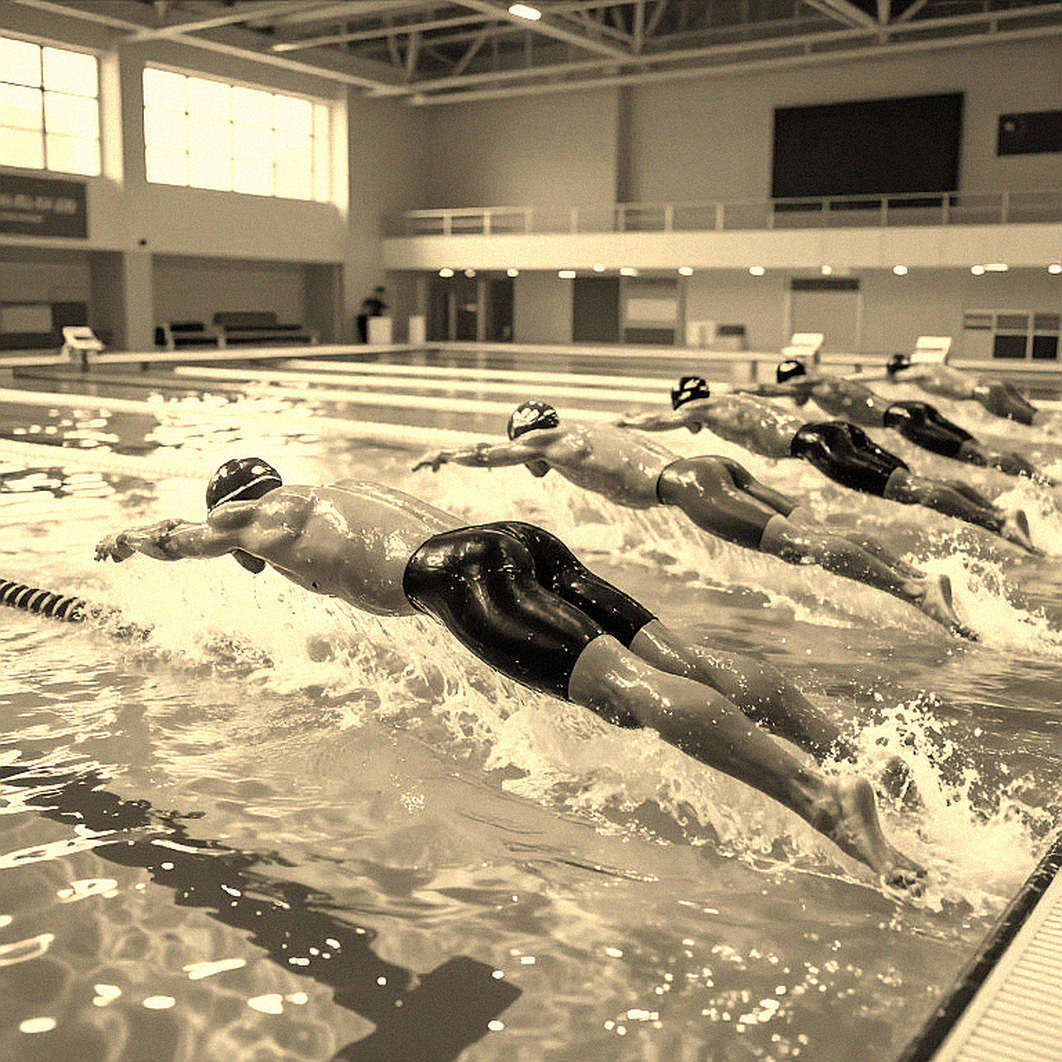
When the clock stopped at 45.61 seconds, Gui Caribe looked up at the scoreboard and nodded gently. No wild celebration. No fist-pumping. Just a nod — as if he already knew it from the morning, when he swam 45.96 in the prelims. As someone who has watched hundreds of races, I know what that nod means: this was not a shock, this was a confirmation. Caribe had just broken the José Finkel Trophy meet record, punched his ticket to the Short Course World Championships (SC Worlds) in Beijing in September 2026, and more importantly — he sent a clear signal to Kyle Chalmers and David Popovici that the SCM 100m free podium has a new face coming.
Context: The José Finkel Trophy — where Brazil's team fate is decided
The José Finkel Trophy is not just any meet. It is the Brazilian Short Course National Championships, serving as the selection meet for the 2026 SC Worlds in Beijing. In Brazil's swimming hierarchy, the José Finkel Trophy sits just below the Olympics and Long Course World Championships — a Tier 3 event carrying Tier 1 pressure because it determines who gets on the plane to China.
I have witnessed too many athletes crumble under selection pressure. Some swim 0.5 seconds faster than their PB in prelims only to go 1 second slower in finals because they couldn't handle the weight of the ticket. Caribe, at 23, seems to belong to the rare opposite group: he swims faster when the pressure is higher. Prelims 45.96, finals 45.61 — a 0.35-second improvement on the same day. That is the hallmark of an athlete who knows how to manage energy and emotion.
The SC Worlds selection standard for the men's 100m free was 46.89 — a mark Caribe cleared by 1.28 seconds, a massive margin in elite swimming. But the story is not only about Caribe. His teammate Marcelo Alves touched at 46.92 — 0.03 seconds slower than the standard. Three hundredths of a second. A blink. A scoreboard margin of error. Alves finished second, winning silver, but his Beijing ticket remains in limbo.
Core: Deconstructing 45.61 — walking the line between excellence and perfection
Let me dissect the number 45.61 through data, because that is how I have worked for 30 years. Data has no gender, and it has no emotion — it only tells the truth.
1. Split analysis: the story of three-quarters of the race
Caribe swam with a positive split structure — 21.65 for the first 50m and 23.96 for the second 50m. This is a common pacing pattern in short-course 100m freestyle: elite swimmers typically go 21.0–21.5 out and 23.0–23.5 back. Caribe falls within that range.
The interesting part is the 25m segment analysis: - First 25m (including start + underwater phase): 10.11 seconds - Second 25m: 11.54 seconds - Third 25m (including the 50m turn): 12.09 seconds - Final 25m: 11.87 seconds
The 12.09-second third 25m is the most notable figure. This was the slowest segment of the entire race, and it includes the turn at the 50m wall. In short-course swimming, where turns and underwater work determine 30–40% of performance, a 12.09-second segment signals that Caribe may have lost optimization at the mid-race turn.
I have tracked hundreds of swimmers in my analytical career, and I have noticed a pattern: the world's best 100m freestylers — Chalmers, Popovici, Dressel — all have third segments under 11.80 seconds. If Caribe can improve his turn at the 50m wall and bring the third segment down to 11.80–11.90 seconds, he could approach the 45.3–45.4 range. And suddenly, Chalmers' world record of 44.84 no longer seems distant.
However, I must also point out the limits of the data: we do not have Caribe's underwater kick distance measurements. This is a critical variable that not all meets publish. At Kazan in 2026, I learned that a 99% probability can still die on the betting table — and an analysis missing underwater kick data is like a map missing coordinates.
2. Comparison with the world record and international arena
Caribe's 45.61 is 0.77 seconds off the SCM 100m free world record. In swimming, 0.77 seconds over 100m is a significant gap — roughly equivalent to 2 meters in the water. But what makes me optimistic is that Caribe is only 23 and still in a physical development phase. He won bronze medals at the 2026 Pan Pacific Championships in both the 50m and 100m freestyle (long course) — which demonstrates he is not a pure short-course specialist. The short-course to long-course transition is a challenge that many swimmers fail, but Caribe has proven his adaptability.
Comparing to Caribe himself: his South American record is 45.47 — 0.14 seconds faster than 45.61. This indicates he is operating at or near his ceiling. There is no sign of a sudden breakthrough, no anomaly in his development trajectory. This is a steadily progressing athlete — exactly the kind that betting analysts like me value for predictability.
3. The bigger picture: Brazil and the relay race
One often-overlooked aspect of individual performances is their significance for relay teams. Brazil has a strong freestyle relay tradition — César Cielo, Bruno Fratus, Nicholas Santos are names that have put Brazil on the world podium. With Caribe (45.6) and Alves (46.9), Brazil has two legs for the SCM 4×100m freestyle relay. But Alves missed the standard by 0.03 seconds — if he is not selected, Brazil loses a critical leg.
Player valuation is not a calculation; it is a war between faith and the spreadsheet. In Alves' case, the spreadsheet says he is not fast enough. But faith says 0.03 seconds is a margin of error that can be overlooked. Will Brazil's coaching staff dare to bet on him?
Contrarian: Pedro Souza and the 4.82-second leap — monitor, don't accuse
No discussion of the José Finkel Trophy would be complete without mentioning Pedro Souza, who shocked the field with a 1:51.18 in the SCM 200m butterfly — a 4.82-second improvement from his 1:56.00 in 2026.
As an analyst, this is the kind of number that makes me sit up straight. 4.82 seconds in a 200m event over two years is a very large improvement. To put it in context: a 21-year-old athlete in a physical development phase can typically improve 2–3 seconds through height gains, muscle mass increases, and technical refinement in turns and underwater work. But 4.82 seconds is at the upper boundary of expectation.
Let me be clear: I am not making any accusations. I have been in this industry long enough to know that extraordinary leaps sometimes have perfectly reasonable explanations — a healed old injury, a training system change, late physical maturation. Kazan is the day I learned that a 99% probability can still die on the betting table — and conversely, an anomalous number can still be real.
But as a source-citing critic, I have a responsibility to point out: Souza jumped from obscurity to Brazil's #4 all-time in the 200m butterfly. He cleared the selection standard of 1:53.19 by a massive 2.01 seconds. If he repeats this performance at the Beijing SC Worlds, I will be the first to applaud. But I will also be the first to say: we need more data. One meet is one sample. Two meets is a trend. Three meets is a confirmation.
Another story: Etiene Medeiros and the comeback at 35
I cannot end this analysis without mentioning Etiene Medeiros. At 35, after giving birth and taking years off competition, she returned to win gold in the women's 50m backstroke with 26.92. This time is 0.38 seconds off the selection standard — but what impresses me is not the number, but the story behind it.
I have witnessed too many female swimmers disappear from the sport after childbirth. Medeiros' return, even if short of the standard, is a significant signal that Brazil's support structure for female athletes is changing. She has competed in three meets since April 2026 — the Winter Open, the Maria Lenk Trophy, and now the José Finkel Trophy. The trajectory is upward. If she finds those 0.38 seconds in subsequent selection opportunities, her comeback story will be one of the most inspiring in Brazilian swimming this decade.
Data has no gender, but the people who read it do. And I read in Medeiros a resilience that no number can measure.
Takeaway: Signals for Beijing 2026 and beyond
The 2026 José Finkel Trophy has given us three important signals:
First, Gui Caribe is a genuine medal contender for the Beijing SC Worlds. 45.61 is fast enough to make the final, and with a slight improvement at the 50m turn, he can absolutely challenge for a medal. At 23, with a steady development trajectory, Caribe represents the future of Brazilian sprint swimming in the post-Cielo era.
Second, Pedro Souza is an intriguing variable. The 4.82-second leap needs confirmation across multiple meets, but if real, Brazil may have found a rare butterfly talent — an event where the country has never truly excelled.
Third, the peripheral stories — Alves missing by 0.03 seconds, Medeiros returning at 35 — remind us that swimming is not just numbers on a scoreboard. Behind every calculation is a person with a gender, with emotions, who can fail even when the probability is 99%.
I don't believe in emotions. I believe in data series longer than your emotions. But I also believe that the most beautiful numbers are the ones that tell human stories. And the 2026 José Finkel Trophy told many stories.
